How to Potty Train a Kangal Puppy
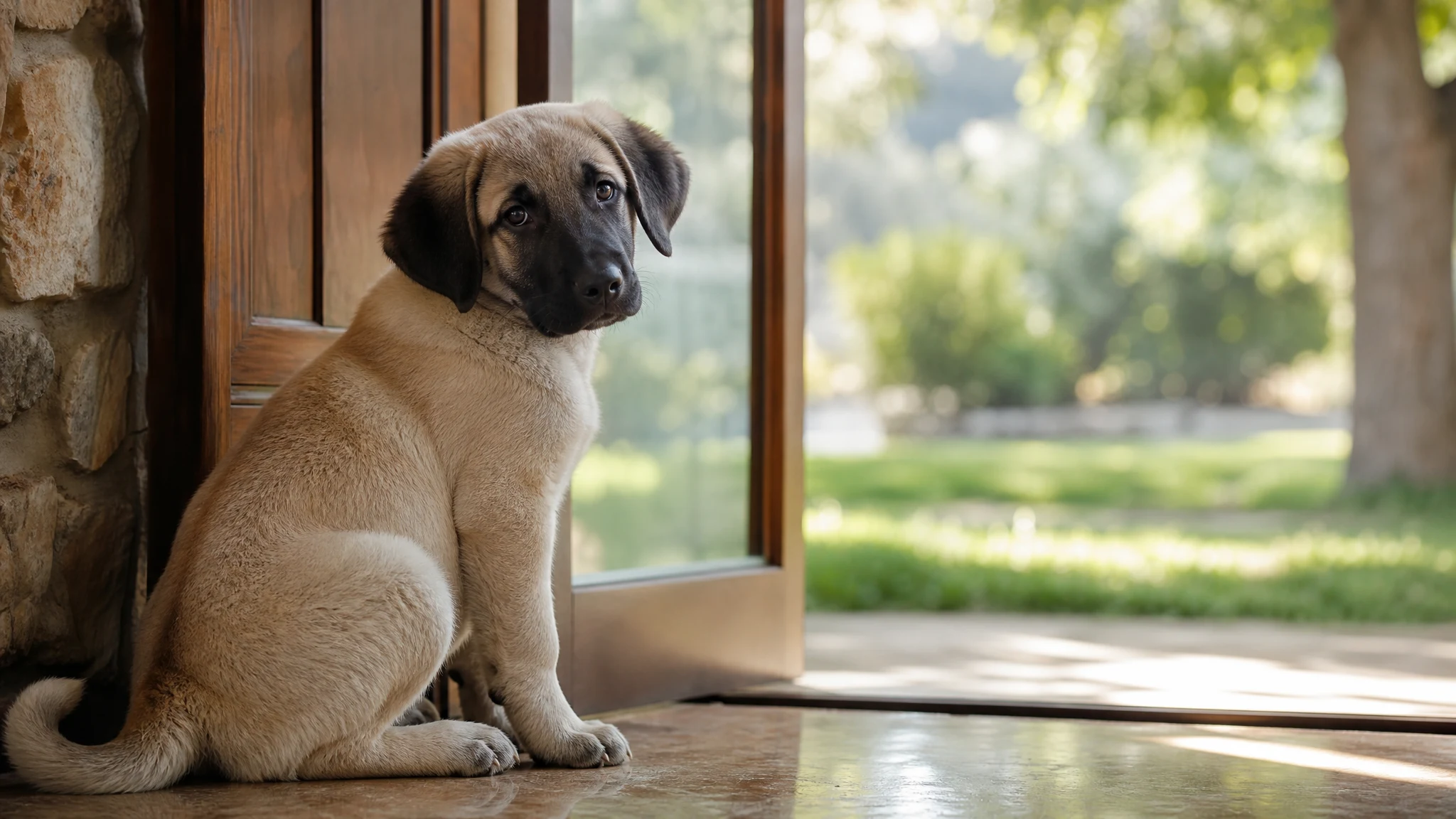
General training information. Every dog is an individual; for health or behavior concerns, see your veterinarian.
A Kangal puppy is cute for about a week. Then you notice how fast the puppy grows and how many puddles a big dog can leave. The good news is that the basics of house training a Kangal are the same as for any dog: a steady routine, lots of chances to succeed, and calm reactions to mistakes.
What changes is the dog. This is a livestock guardian, and the Kangal Dog Club of America (KDCA) describes it as intelligent and quick to learn but independent. This guide shows how to potty train a Kangal with that in mind.
Why Kangal Potty Training Needs a Plan
Size is the first reason. The KDCA says a Kangal puppy of 6 to 12 months can weigh 80 to 130 pounds. The United Kennel Club (UKC) breed standard lists adult males at 110 to 145 pounds and females at 90 to 130 pounds. A habit you let slide at 10 weeks becomes a much bigger mess, and a much bigger dog to manage, a few months later.
Temperament is the second reason. The KDCA notes that Kangals may ignore commands when something more interesting is nearby. A puppy who would rather sniff the fence line than go potty is normal for a dog bred to watch over a flock. You will win with structure and rewards, not with pressure.
The KDCA also says that without training and socialization, problem behaviors tend to show up in adolescence and are harder to retrain. Starting house training early, and keeping it consistent, helps you avoid that.
What You Need Before You Start
- A crate sized for a growing dog. It should be big enough for the puppy to stand, turn around and lie down. Because this breed grows fast, plan on a large crate, or a divider panel you can move as the puppy grows.
- A sturdy leash and a secure collar or harness. A flat collar or a well-fitted harness is enough. Avoid prong, choke or shock collars.
- Small, soft treats. Pea-sized pieces are easier to use quickly. Ask your veterinarian which treats and how many are right for your puppy.
- An enzymatic cleaner made for pet messes. It helps remove odor so the puppy is less likely to return to the same spot.
- A designated potty spot. Choose one place outside and keep it the same.
- Good fencing. The KDCA says good fencing is a requirement for this breed and that some Kangals have climbed 6-foot fences. It also says puppies may look for openings in fences and wander.
- A notebook or phone notes. You will track meals, naps, potty trips and accidents.
- Patience. It is the one item that cannot be skipped.
Step-by-Step: How to Potty Train a Kangal Puppy
Step 1: Pick the spot and the cue
Choose one outdoor area and always walk the puppy there on leash. Pick a short cue such as "go potty" and use it every time. Say it once, quietly, as the puppy begins to go. Do not repeat it over and over.
Even in a fenced yard, keep the leash on for early potty trips. A Kangal puppy that wanders off to explore is not training, it is practicing a different habit. The leash also keeps the trip short and focused.
Step 2: Set a predictable daily schedule
Puppies go potty after waking, after eating, after play and after drinking. A schedule lets you get ahead of those moments. Here is a sample you can adjust to your household:
- First thing in the morning: straight outside, before anything else.
- Breakfast, then outside within a short time.
- Play or training, then outside.
- Nap in the crate, then outside the moment the puppy wakes.
- Lunch, then outside.
- Repeat the pattern through the afternoon, with an outside trip after every meal, play session and nap.
- Dinner, then outside.
- A last trip right before bed.
Young puppies cannot wait long, so expect to go out often and to wake once or more at night at first. Your veterinarian can tell you how many meals a day suit your puppy and how long it is reasonable to expect your puppy to wait at each age. Ask also about feeding times, since large and giant breeds can have special feeding needs.
Step 3: Reward right at the spot
When the puppy finishes going outside, praise calmly and hand over a treat immediately. Timing matters. The reward needs to come while the puppy is still at the spot, not after you walk back to the door.
Then, and only then, offer a little play or a short walk as a bonus. If play comes first, a puppy that likes to take its time may learn that going potty ends the fun, and may start holding it.
Step 4: Use the crate as a management tool
Most dogs avoid soiling the place where they sleep, which is why the crate helps. Make it comfortable and quiet, and introduce it with treats and short stays so it is a good place to be.
- Take the puppy straight outside when you let them out of the crate.
- Do not leave the puppy crated for longer than they can reasonably wait. A puppy forced to soil the crate may lose the instinct to keep it clean.
- Never use the crate as punishment.
- When you cannot watch the puppy, use the crate or a small gated area.
A crate is not a substitute for exercise and attention. The KDCA says the breed needs a job or activities to prevent boredom, so build in daily walks and training time too.
Step 5: Supervise indoors
When the puppy is out of the crate, keep them in sight. Keep a leash attached indoors for the first weeks if that helps, so you can guide the puppy to the door the moment you see signs.
Common signs include sniffing the floor, circling, whining, drifting away from the family and heading for a corner. If you see them, calmly say your cue and head outside.
Step 6: Handle accidents without punishment
Accidents are part of the process. How you react matters a lot.
- If you catch the puppy in the act, make a small interrupting sound, then quietly lead or carry the puppy outside. Reward if they finish there.
- If you find the mess later, just clean it. The puppy cannot connect the mess to something that happened minutes ago.
- Clean with an enzymatic cleaner and do not use ammonia-based products, whose smell can resemble urine.
- Write down what happened. Was a trip missed? Was it after a meal? Patterns show you how to adjust the schedule.
Do not scold, shove a nose in the mess, or use physical corrections. This approach is out of line with the guidance of the American Veterinary Society of Animal Behavior (AVSAB), and it can make a puppy afraid to go in front of you. The KDCA also says excessively harsh obedience methods are detrimental to this breed. It recommends gentle but firm nurture, which means being consistent and clear rather than harsh.
Step 7: Stretch the time between trips gradually
Once the puppy has gone several days with few or no accidents, add a little time between trips. If accidents return, go back to the earlier schedule for a while. Moving backward is not failure. It is adjusting to what the puppy can handle.
Step 8: Add freedom slowly
Open up the house one room at a time. Start with the room where the family spends the most time. A puppy who can only go in the right spot, and has done so reliably, has earned the next bit of space.
Step 9: Plan for adolescence
Kangals grow fast, and the KDCA warns that problems can appear in adolescence if training and socialization were skipped. Keep up the routine as the dog grows. A vet reference site, The Vet Desk, says the breed matures more slowly than smaller breeds, so do not assume that a big body means a finished brain.
How Long Does It Usually Take?
There is no single number that fits every Kangal. None of the breed sources, including the UKC and KDCA, give a house training timeline, so please do not trust anyone who promises one. Puppies differ in age when they come home, how consistent the household is, and how quickly their bodies mature.
Many puppies make clear progress over a few weeks of steady routine, but fully reliable habits often take months. Expect some setbacks, especially during growth spurts, changes in routine or when the puppy is excited. Your veterinarian can help you judge whether your puppy is on a normal track.
Tips for Kangal Puppies Specifically
- Keep sessions short and rewarding. The KDCA says Kangals are independent and may ignore commands when distracted, so train in a quiet spot first and add distractions slowly.
- Be consistent as a household. Everyone should use the same spot, cue and schedule.
- Watch the fence. The KDCA notes that Kangals dig dens, tunnel under fences and dig craters. A digging puppy in the potty area is a sign to check for escape routes, and also to give the puppy more to do.
- Expect noise at night. The KDCA says the breed barks and roars, especially at night. A puppy who wakes at night may also bark for a potty trip. Keep night trips calm and boring so the puppy does not learn that 3 a.m. is playtime.
- Socialize early. The KDCA says socialization must start very young and continue into adulthood. Calm exposure to new people, sounds and places can happen on the same walks that serve as potty breaks, but ask your veterinarian when it is safe for your puppy to go where other dogs have been.
- Be careful around new dogs. The UKC describes the breed as instinctively wary of strange dogs, and the KDCA says new animals must be introduced properly. Keep the potty area calm and uncrowded.
- Do not expect off-leash reliability. The KDCA says Kangals cannot be trusted off leash unless somewhere extremely remote and after extensive training. A leash is part of life with this breed.
Common Mistakes to Avoid
- Giving too much freedom too soon. More space means more chances to have an accident.
- Waiting for the puppy to ask. Many puppies give very little warning. Take them out on schedule.
- Skipping the reward. Without it, the puppy has little reason to repeat the behavior.
- Punishing accidents. This can teach a puppy to hide to go, and it works against the trust you need with a guardian breed.
- Leaving the puppy alone in the yard. A puppy alone may dig, wander or simply play, and miss the point of the trip. Go out with the puppy.
- Changing the plan every few days. Pick a routine and give it time.
- Ignoring the calendar. A big puppy still has a small puppy's body. Do not expect adult control early.
When to Call Your Veterinarian
If a puppy that was doing well suddenly has frequent accidents, strains, seems to be in pain, drinks much more than usual or has other changes, talk to your veterinarian before assuming it is a training problem. Health issues can look like house training trouble, and only a vet can sort them out. Do not give any medication or supplement unless your vet says to.
What to Expect
With a steady schedule, plenty of rewards and calm handling of mistakes, many Kangal owners find that accidents become less frequent over time. Results vary from dog to dog, and no method works for every puppy. Some puppies catch on quickly and others need months. The effort you put in now also supports the training and socialization the KDCA says this breed needs.
The KDCA says a Kangal is not a good match for first-time owners. If this is your first large guardian dog, consider reaching out to the Kangal Dog Club of America for guidance before and after you bring a puppy home.