Training Your Kangal Dog From Day One
Kangals are livestock guardians, not eager-to-please pets. Here is how to start reward-based training, socialization and fence planning early, so a very large, independent dog grows into a steady companion.
Kangal Training Guides
Start with the basics below, then work through each guide at the pace your dog and your household allow.
Puppy
From the first night home to adolescence: a Kangal puppy's training.
Training basics
Potty, crate and leash training, written for Kangals.
Behavior
The Kangal problems owners ask about most, and the instincts behind them.
Exercise and jobs
How much a Kangal needs to do, and the sports and work the breed was made for.
What Kangals do
Sports and work the breed is known for. source
The Kangal at a glance
From the AKC breed page and the national breed club, as they state it.
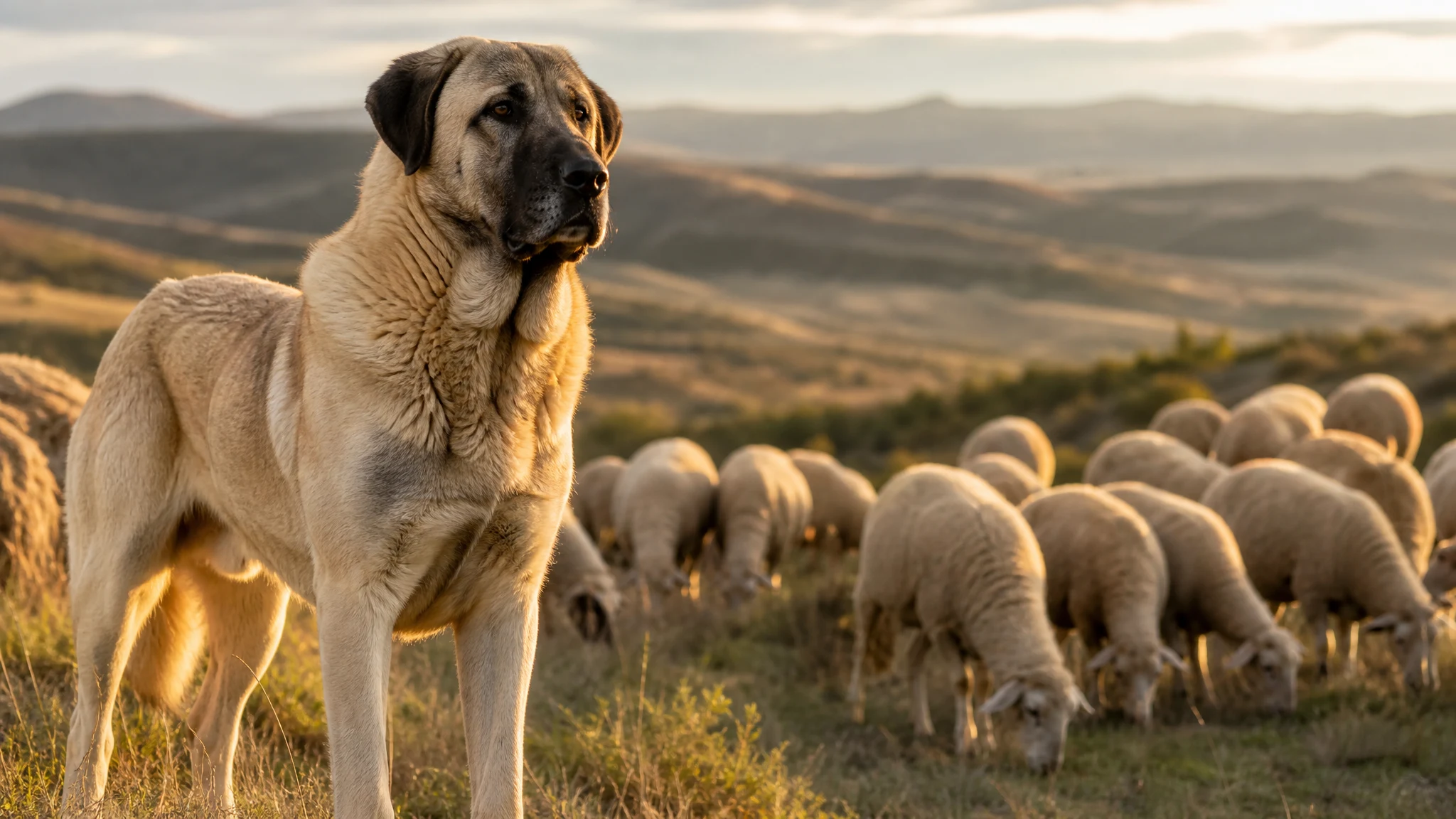
| Origin | Named for the Kangal District of Sivas Province in central Turkey; dogs once ranged across the Anatolian plateau. Brought to the U.S. in 1985; UKC recognized the breed in 1998. source |
| Bred for | Livestock guardian: flock protector that confronts and intimidates predators; it does not herd. Used to control predators such as wolves, cougars, bears and feral dogs. source |
| Height | 29 to 33 inches (males), 27 to 31 inches (females) at the withers at maturity (UKC). The KDCA page gives 30-34 inches for males and 28-31 inches for females. The two sources differ. source |
| Weight | 110 to 145 pounds (males), 90 to 130 pounds (females) in good condition (UKC). The KDCA page gives 110-140 lbs for males and 90-120 lbs for females. source |
| Life expectancy | 11-13 years (veterinary reference site; no club or UKC figure found) source |
| Energy | Calm and economical with effort; conserves energy. Needs a job or activities to prevent boredom. source |
| Trainability | Intelligent and quick to learn but independent; may ignore commands when something more interesting is nearby. Not automatic set-and-forget guardians; they need socialization and training. source |
| Barking | Barks and roars, especially at night when they sense coyotes or other threats. source |
| With children | Not described as kid-friendly by the one source that addresses it (a vet reference site). The KDCA page gives no direct guidance on children. source |
| With other dogs | Instinctively wary of strange dogs but not typically belligerent toward people. The KDCA says new animals must be introduced properly. source |
| Shedding | Sheds the undercoat twice a year. source |
| Temperament | Alert, territorial and defensive of the animals or family it bonds to; reserved with strangers unless the owner is present (UKC). Gentle and trustworthy with its own people or animals, protective when needed (KDCA). source |
Kangal health screening
Tests the breed's club and OFA recommend for breeding dogs. Ask a breeder for results.
| Health issues the club notes | Hip dysplasia (serious), Elbow dysplasia (serious), Bloat (serious), Patent ductus arteriosus (minor), Dental disease (minor), Hypothyroidism (minor) source |
| National breed club | Kangal Dog Club of America (KDCA), https://www.kangaldogclubofamerica.com. UKC requires its approval for Kangal single registrations. This is a UKC breed club, not an AKC parent club. source |
Kangal Training Questions Answered
Is a Kangal a good first dog?
The Kangal Dog Club of America says this breed is not for first-time owners. It describes an intelligent but independent dog that may ignore commands when something else is more interesting. If you are new to dogs, talk with the club and a reward-based trainer before you decide.
When should Kangal socialization start?
The Kangal Dog Club of America says socialization for a companion Kangal must start very young and continue into adulthood. It also warns that without training and socialization, problem behaviors emerge in adolescence and are harder to retrain. Ask a reward-based trainer how to plan safe, gentle introductions for your puppy.
What training methods suit a Kangal?
The Kangal Dog Club of America says gentle but firm nurture works and that excessively harsh obedience methods are detrimental. That fits the American Veterinary Society of Animal Behavior position favoring reward-based training. Use treats, praise and calm repetition, and skip shock, prong or choke collars, and any dominance tactics.
Can a Kangal be trusted off-leash?
The Kangal Dog Club of America says a Kangal cannot be trusted off-leash unless somewhere extremely remote and after extensive training. It also calls good fencing a requirement, noting some have climbed 6-foot fences and that Kangals dig tunnels under fences. Plan your yard before the puppy comes home.
How big will my Kangal puppy get?
The United Kennel Club gives 110 to 145 pounds for males and 90 to 130 for females. The Kangal Dog Club of America says puppies of 6 to 12 months can weigh 80 to 130 pounds. Size arrives fast, so teach leash manners and polite greetings while your dog is still small.
General training information. Every dog is an individual; for health or behavior concerns, see your veterinarian.