Kangal Training: The Complete Guide for Owners
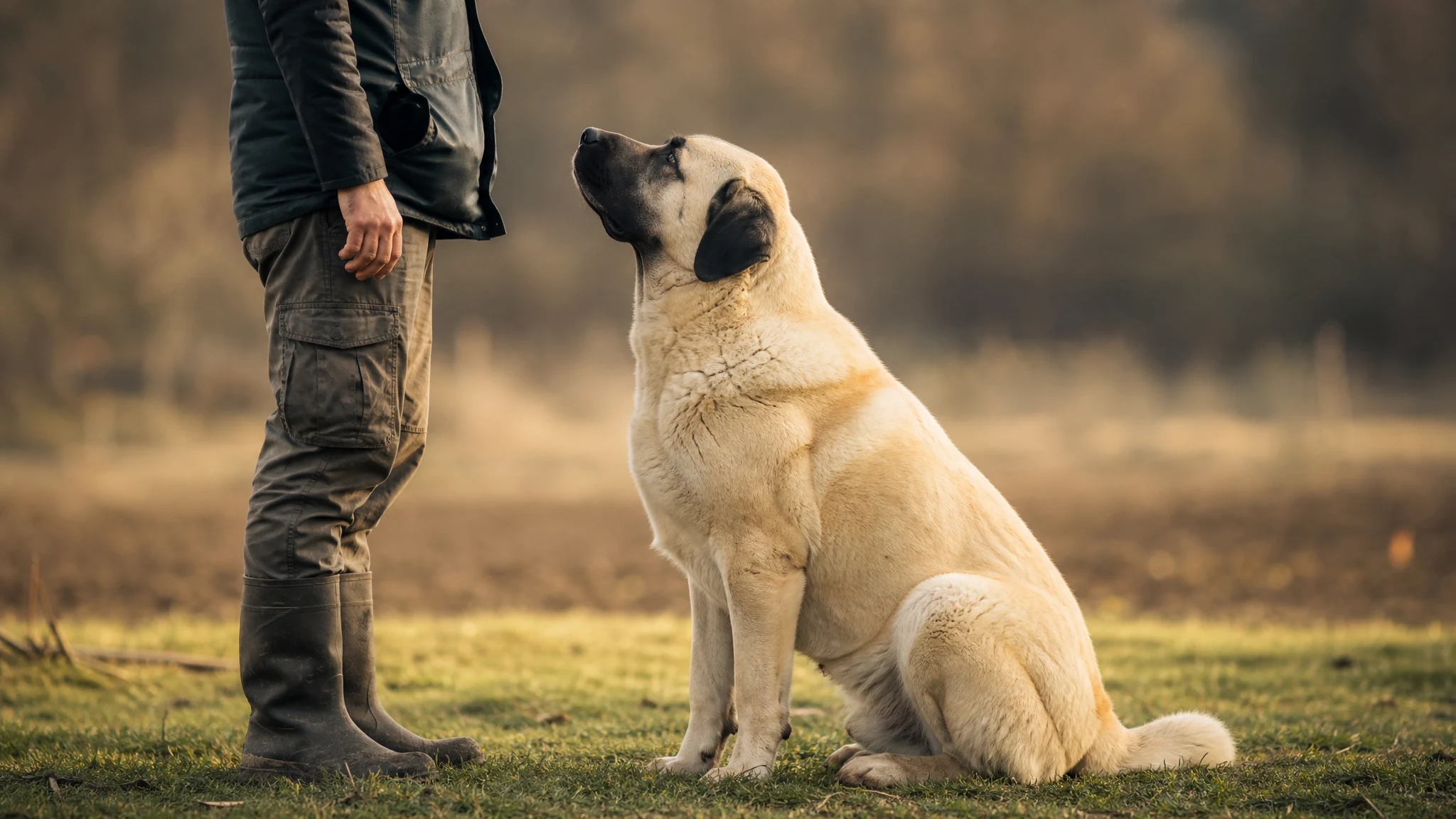
General training information. Every dog is an individual; for health or behavior concerns, see your veterinarian.
Kangal training starts with understanding what you actually live with. This is not a dog bred to fetch, heel or hang on your every word. It is a livestock guardian, and that fact shapes almost everything about how to train a Kangal.
I love this breed. I also think it is one of the most misunderstood dogs in the country. This guide covers what the Kangal was made for, how training changes from puppyhood to adulthood, what motivates these dogs, how to give them work, and the problems you should plan for before you bring one home. Individual dogs vary, so treat everything here as a starting point rather than a promise.
Key takeaways
- The Kangal is a livestock guardian that confronts predators. The Kangal Dog Club of America (KDCA) says it does not herd.
- The KDCA says socialization for a companion Kangal must start very young and continue into adulthood.
- Gentle but firm nurture works. The KDCA says excessively harsh obedience methods are detrimental.
- These dogs are intelligent but independent, and they may ignore commands when something more interesting is nearby.
- Good fencing is a requirement, and the KDCA says the breed cannot be trusted off-leash outside of extremely remote places.
- The KDCA says this is not a breed for first-time owners.
In this guide
- What the Kangal Was Bred to Do and Why It Shapes Training
- Kangal Training Stages: Puppy to Adult
- Motivation That Works for a Kangal
- Exercise and Mental Work
- Challenges to Plan For
- Is a Kangal Right for You? A Reality Check
What the Kangal Was Bred to Do and Why It Shapes Training
The United Kennel Club (UKC) says the breed is named for the Kangal District of Sivas Province in central Turkey, and that these dogs once ranged across the Anatolian plateau. The UKC says the Kangal came to the United States in 1985 and was recognized by the UKC in 1998. The UKC lists the breed in its Guardian Dog Group.
That history matters. A dog shaped by a landscape like that was not asked to take direction all day. It was asked to make decisions on its own.
A guardian, not a herder
According to the Kangal Dog Club of America, the Kangal is a flock protector that confronts and intimidates predators. It does not herd. The KDCA says the breed was used to control predators such as wolves, cougars, bears and feral dogs.
Think about what that means in a backyard. A dog bred to stand between a flock and a wolf will take its job seriously when a stranger walks up the driveway, when a neighbor's dog barks, or when something moves at the fence at night.
Temperament in plain terms
The UKC describes the Kangal as alert, territorial and defensive of the animals or family it bonds to. It says the dog is reserved with strangers unless the owner is present. The KDCA describes the breed as gentle and trustworthy with its own people or animals, and protective when needed.
The UKC also says the Kangal is instinctively wary of strange dogs but not typically belligerent toward people. The KDCA says new animals must be introduced properly.
None of this means every Kangal behaves the same way. It means you should expect guarding instincts and plan your training around them, not against them.
Not a personal protection dog
Some people want a Kangal because it looks formidable. The KDCA is direct on this point. It says the breed is not a personal protection dog and is not seen in Schutzhund work for police or military. The KDCA also says the Turkish military tested the breed and concluded it is unsuitable for that work.
So please do not train a Kangal to be aggressive on command. That is not what the breed is for, and it is a safety risk for you, your neighbors and the dog.
What the breed's purpose tells us about training
- Independence is built in. The KDCA describes the breed as intelligent and quick to learn but independent.
- Guarding is not a bug. You are channeling it, not erasing it.
- Socialization is the main project. A guardian that understands what is normal is safer than one that treats everything as a threat.
- Cooperation has to be earned. A dog that makes its own decisions will work with you when the relationship is good.
Kangal Training Stages: Puppy to Adult
The KDCA says Kangal puppies grow rapidly into very large dogs. It notes that a puppy of 6 to 12 months can weigh 80 to 130 pounds. A vet reference site, The Vet Desk, says Kangals mature more slowly than smaller breeds.
That combination is the whole training challenge in one sentence. You have a big, strong, still-immature dog who is learning how the world works. The KDCA warns that without training and socialization, problem behaviors emerge in adolescence and are harder to retrain.
So the work you do early pays off later. Here is a practical way to think about the stages. The age ranges are my rough framing, not figures from the breed sources, so adjust them for your own dog.
Stage 1: The early puppy weeks
The KDCA says socialization training for a companion Kangal must start very young. Here is what I would focus on:
- Calm exposure. Let the puppy see and hear ordinary life at a comfortable distance. Vehicles, visitors, household noises and different surfaces all count.
- Good experiences with new people. Keep greetings relaxed. Let the puppy approach rather than pushing the puppy toward strangers.
- Handling. Practice gentle touching of paws, ears, mouth and collar area with treats. You will need a dog who tolerates veterinary exams and grooming at 120 pounds.
- Home routines. Housetraining, a crate or safe resting spot, and consistent daily rhythms.
Check with your veterinarian about when it is safe for your puppy to meet other dogs and visit public places. Vaccination timing is a medical question, not a training one.
Stage 2: Foundations while the puppy is still manageable
This is the time to teach the basics while you can still physically guide the dog. Start with these:
- Name response and eye contact
- Sit, down and a settled stay
- Walking beside you on a loose leash
- Coming when called, practiced on a long line in a secure area
- "Leave it" and "drop it"
- Going to a mat and relaxing
Keep sessions short and upbeat. Because the KDCA describes the breed as independent, you want the dog to see training as something worth doing, not a chore to be endured.
Do not skip leash skills. A well-mannered large dog on a leash is a gift to everyone around you, and the KDCA says the breed cannot be trusted off-leash unless somewhere extremely remote and after extensive training.
Stage 3: Adolescence
This is where many Kangal owners struggle. The puppy is large, confident and testing everything. The KDCA says problem behaviors are harder to retrain if training and socialization were lacking earlier.
What helps:
- Keep going. Do not assume the basics are finished because the dog did them well at four months.
- Raise the difficulty gradually. Practice cues with more distance, more distraction and longer duration.
- Stay consistent as a household. Everyone uses the same cues and rules.
- Manage the environment. A secure yard, a leash and a long line prevent rehearsal of unwanted behavior.
- Keep socializing. The KDCA says it must continue into adulthood. Quality matters more than quantity.
Stage 4: Adulthood
An adult Kangal is not finished learning. The KDCA says training makes a better working dog, and I would say the same for a companion.
The UKC gives adult size as 29 to 33 inches for males and 27 to 31 inches for females at the withers, with weights of 110 to 145 pounds for males and 90 to 130 pounds for females. The KDCA gives 30 to 34 inches and 110 to 140 pounds for males, and 28 to 31 inches and 90 to 120 pounds for females. The two sources differ a little, but either way you are managing a very large dog.
In adulthood, focus on maintaining skills, refining manners with visitors and practicing calm behavior in everyday situations. Keep up the introductions of any new animals, since the KDCA says they must be introduced properly.
Motivation That Works for a Kangal
Training methods for this breed should be humane and reward-based, in line with the American Veterinary Society of Animal Behavior (AVSAB). The KDCA agrees on the spirit of this. It recommends gentle but firm nurture and says excessively harsh obedience methods are detrimental.
I would go further. With a dog this large and this independent, force-based training does not just risk harm. It also damages the trust you need.
What gentle but firm looks like
Firm does not mean harsh. It means you are clear, calm and consistent.
- You have rules and you enforce them the same way each time.
- You prevent mistakes with management rather than punishing them afterward.
- You reward what you want, and you make it easy for the dog to get it right.
- You stay calm when the dog tests you.
Please avoid shock, prong or choke collars, alpha rolls, scruffing and any dominance-based methods. They are not in line with AVSAB guidance, and they are a poor fit for a guardian dog that already has strong protective instincts.
Finding what your dog values
The breed sources do not list favorite rewards, so you will need to find out for your own dog. Try a few options and watch the response:
- Food. Small, soft treats work for many dogs. Use part of the daily meal if weight is a concern, and ask your veterinarian about portions.
- Praise and calm attention. Some dogs value this highly once there is a bond.
- Access to things the dog wants. Going through a door, sniffing a spot or moving toward something interesting can all be rewards.
- Toys or play. Not every Kangal will want to play, so do not force it.
Working with independence
The KDCA says Kangals may ignore commands when something more interesting is nearby. That is not defiance in the human sense. It is a dog that was bred to judge situations for itself.
Some ways to work with that:
- Train in easy places first. Build the habit where nothing competes with you.
- Pay well for hard cues. Coming away from something interesting deserves your best reward.
- Keep requests realistic. If your dog cannot do a cue near a distraction yet, back up and make it easier.
- Use a leash or long line. Do not give the dog the chance to practice ignoring you.
- End on a good note. Stop while the dog is still willing.
If you are struggling
If your dog is showing fear, guarding aggression or other worrying behavior, get help early. Look for a qualified, reward-based professional, and talk to your veterinarian to rule out medical causes. I cannot tell you who to hire, so check credentials and methods carefully. The KDCA is also a reasonable place to ask about breed-experienced contacts.
Exercise and Mental Work
Many people assume a giant dog needs hours of running. The KDCA describes the Kangal as calm and economical with effort, a dog that conserves energy. At the same time, it says the dog needs a job or people and activities to prevent boredom, along with daily walks for physical and mental stimulation.
The KDCA does not give a specific exercise amount, so I will not invent one. Ask your veterinarian what is appropriate for your dog's age and condition, especially while the puppy is growing.
Daily walks
Walks do two jobs. They burn some energy, and they let your dog take in the neighborhood in a controlled way. Vary your routes. Let the dog sniff. Use walks to practice loose-leash manners and calm passing of other people and dogs at a comfortable distance.
Because the UKC says the Kangal is wary of strange dogs, plan your walks so you can create space when needed. Quiet times and wide paths make life easier.
Giving a guardian a job
The KDCA says the breed needs a job. For a companion dog, that does not mean working stock. It means giving the dog meaningful things to do. Ideas that suit a calm, thinking dog:
- Sniffing games. Hide treats around a room or yard and let the dog search.
- Food puzzles. Feeding part of a meal from a puzzle toy or scatter feed turns eating into work.
- Short training sessions. A few minutes of new cues each day keeps the mind busy.
- Settle practice. Teaching the dog to relax on a mat is a real skill and a useful one.
- Property patrol with you. Walking the fence line together on a leash, calmly, lets the dog check its territory without rehearsing frantic barking.
The KDCA found no AKC events or sports for this breed, and the dog's recognized work is livestock protection. So I would not build your plan around competition sports. Check with the UKC or the KDCA if you want to know what activities exist for the breed.
Watch the digging
The KDCA says the Kangal digs dens, tunnels under fences and craters. If your dog has nothing to do, expect the yard to show it. Consider offering a designated digging spot, and make sure fence lines are secure at ground level.
Challenges to Plan For
The KDCA is honest about what this breed asks of an owner. I want to be equally honest. These are the points I would think hard about before choosing a Kangal.
Fencing is a requirement
The KDCA says good fencing is a requirement and that some Kangals have climbed 6-foot fences. It also says puppies may seek openings in fences and wander, and that the dogs tunnel under fences.
Walk your property before the dog arrives. Look at height, gaps, gates and the ground along the base. Check it again regularly.
Off-leash reliability
The KDCA says a Kangal cannot be trusted off-leash unless somewhere extremely remote and after extensive training. Take that seriously. Plan for a leash, a long line and secure spaces, not for off-leash hikes.
Barking
The KDCA says Kangals bark and roar, especially at night when they sense coyotes or other threats. This is guardian work. You can shape it, but you probably cannot remove it. Think about neighbors, how close your house is to others and whether the dog will be outside at night.
Strangers and visitors
The UKC says the dog is reserved with strangers unless the owner is present. Plan visits carefully. Introduce guests calmly, keep the dog on a leash if needed, and do not leave a dog unsupervised with people it does not know.
Other animals
The KDCA says Kangals may threaten or possibly kill animals they believe are predators. The UKC says they are wary of strange dogs. If you have other pets, or neighbors with animals near your fence, take this seriously. Introductions need to be careful, gradual and managed. Ask the KDCA for guidance on specific situations.
Children
I cannot give you a reliable statement about Kangals and children. The one source that addresses it, The Vet Desk, does not describe the breed as kid-friendly, and the KDCA page gives no direct guidance. If you have children or children visit often, talk to the KDCA and to breed-experienced owners. Never leave any large dog unsupervised with young children.
Size and strength
Puppies become huge very quickly. A dog that jumps up, pulls or mouths is cute at 20 pounds and a problem at 100. Teach polite habits from the first week.
Shedding and grooming
The KDCA says the Kangal sheds the undercoat twice a year. Plan for brushing and some cleanup during those seasons.
Health basics
The Vet Desk, a veterinary reference site, lists hip dysplasia, elbow dysplasia and bloat as serious concerns, and patent ductus arteriosus, dental disease and hypothyroidism as minor ones. It gives a life expectancy of 11 to 13 years. It is a secondary source, so treat these as topics to raise with your vet rather than as a complete picture.
I could not find a club or official list of recommended health screenings, so please ask the KDCA, the breeder and your veterinarian what testing makes sense. Any question about your own dog's health belongs with a veterinarian. Do not use training as a substitute for a medical exam if your dog's behavior changes suddenly.
Is a Kangal Right for You? A Reality Check
The KDCA says this breed is not for first-time owners. I agree. That is not a judgment of anyone's heart. It is a recognition that this dog asks for experience, planning and steady habits.
Before you commit, ask yourself these questions honestly:
- Do I have, or can I build, a fence that will really hold a large, determined dog?
- Can I commit to socialization from the start and keep it up into adulthood?
- Am I comfortable with a dog that barks at night and is wary of strangers?
- Will I train with patience and without harsh methods?
- Do I have other animals, or close neighbors with animals, that could be at risk?
- Can I give the dog a job, daily walks and mental work?
- Can I handle a very large dog physically, now and for years to come?
If you answer yes to most of these, a Kangal might suit you. If you hesitate, that is useful information, and it is far kinder to learn it now than after the puppy arrives.
A simple daily rhythm
Here is a structure I would aim for, adjusted to your dog's age and your vet's advice:
- Morning: a calm walk with loose-leash practice, then a short training session.
- Midday: a food puzzle or scent game, then rest.
- Afternoon: a second outing or a controlled fence-line walk, plus manners practice.
- Evening: a settle session on the mat and a quiet check of the property before bed.
The point is not the exact schedule. It is that your Kangal gets structure, outlets for its mind and repeated chances to learn what you want.
The long view
Training a Kangal is not a quick project. It is a relationship that grows over years. The dog will not behave like a retriever, and it should not. What you can get is a calm, watchful companion who trusts you, understands the rules of the household and uses its natural guarding instincts in ways that are safe for everyone.
That takes early socialization, secure management, humane methods and honest planning. It is demanding, and for the right owner, it is deeply rewarding.