Kangal Sports and Jobs: Putting the Breed's Instincts to Work
General training information. Every dog is an individual; for health or behavior concerns, see your veterinarian.
If you are looking for dog sports for Kangals, here is the honest starting point. This is a livestock guardian, not a ball-chasing, course-running athlete. The best "sport" for most Kangals is a job that fits what the breed was built to do.
This guide walks you through how to choose, set up and run that kind of job. It also covers where traditional sports fit, and where they probably do not.
What the Kangal Was Built to Do
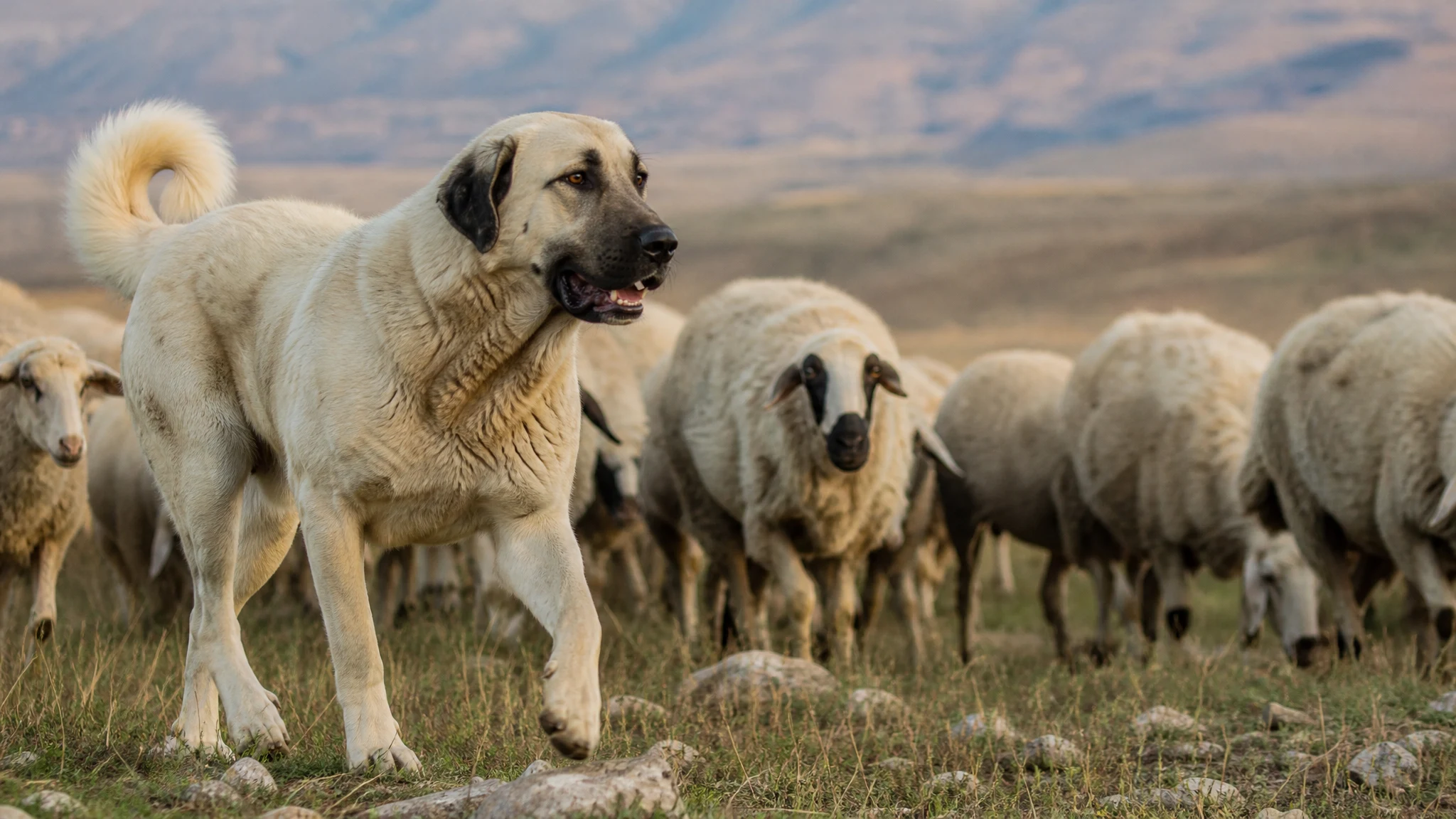
The Kangal Dog Club of America (KDCA) describes the breed as a livestock protection dog. It is a flock protector that confronts and intimidates predators. It does not herd. The KDCA says the breed has been used to control predators such as wolves, cougars, bears and feral dogs.
The United Kennel Club (UKC) describes the temperament as alert, territorial and defensive of the animals or family it bonds to. It is reserved with strangers unless the owner is present. The KDCA adds that a Kangal is gentle and trustworthy with its own people or animals, and protective when needed.
That history matters for sports. A dog bred to watch, wait and decide for itself is a different partner than a dog bred to work closely under handler direction. Individual dogs vary, but plan around the breed's purpose.
What the Kangal Is Not
Before you pick a job, cross a few things off the list. The KDCA says the Kangal is not a personal protection dog. It also says the breed is not seen in Schutzhund work for police or military, and that the Turkish military tested the breed and concluded it is unsuitable.
So "guard dog training" or protection sport is not the path. Do not teach a Kangal to bite on cue or to be sharper. The goal with this breed is a stable, discerning guardian, not a more reactive one.
What You Need Before You Start
- Secure fencing. The KDCA says good fencing is a requirement and that some Kangals have climbed 6-foot fences. It also notes the breed digs dens and tunnels under fences.
- A leash and a plan for control. The KDCA says a Kangal cannot be trusted off leash unless somewhere extremely remote and after extensive training. Use a standard flat collar or a well-fitted harness with a sturdy leash.
- Small, tasty rewards. Reward-based training is the approach used throughout this site. The KDCA says excessively harsh obedience methods are detrimental.
- Time for socialization. The KDCA says socialization for a companion Kangal must start very young and continue into adulthood.
- A contact list. You will want the KDCA, your veterinarian and any local club you are considering.
If you have not built the basics yet, start with the complete Kangal training guide for owners first. Jobs and sports sit on top of that foundation.
Step-by-Step: Giving Your Kangal a Job
Step 1: Be honest about why you want a job for your dog
The KDCA says a Kangal needs a job, or people and activities, to prevent boredom. It also describes the breed as calm and economical with effort, a dog that conserves energy.
That combination is useful. You are not trying to burn off endless energy. You are trying to give a thinking dog something meaningful to do.
The KDCA also says the breed is not for first-time owners. If this is your first large guardian breed, plan to get help from experienced Kangal people early.
Step 2: Choose the job that matches the breed
Here are the realistic options, in order of how well they match the sources.
- Livestock protection. This is the original work, and the one the KDCA names. If you have animals, a Kangal can be introduced to them as their guardian. The KDCA says new animals must be introduced properly, so go slowly.
- Property and family watch. The UKC says the breed is alert and defensive of the animals or family it bonds to. A calm watch role on your own secure land is a natural fit.
- Structured daily activity. The KDCA recommends daily walks for physical and mental stimulation. Think of these as training sessions, not just exercise.
The KDCA did not give a specific amount of exercise, so ask your veterinarian what is right for your individual dog, especially a growing puppy.
Step 3: Start socialization early and keep going
The KDCA says puppies grow rapidly into very large dogs, and a puppy of 6 to 12 months can weigh 80 to 130 pounds. It also says that without training and socialization, problem behaviors emerge in adolescence and are harder to retrain.
Build positive experiences with new people, places and surfaces, at a pace your puppy handles well. Reward calm behavior. Stop and add distance if your puppy seems worried.
Keep this going into adulthood. The KDCA is clear that it is not a one-time project.
Step 4: Teach a few reliable skills with rewards
The KDCA describes the Kangal as intelligent and quick to learn, but independent. It may ignore commands when something more interesting is nearby.
So keep your goals practical. Work on these in short sessions:
- Coming when called, always on a leash or a long line in a secure space
- Sitting or settling on a mat while visitors arrive
- Walking politely on a loose leash
- Letting go of items and handing them over for a reward
The KDCA recommends gentle but firm nurture. In practice, that means clear rules, calm consistency and rewards, not force.
Step 5: Introduce the job slowly
For livestock work, the KDCA warns that a Kangal may threaten or possibly kill animals it believes are predators. That is a serious risk for a young or untrained dog around smaller animals.
Introduce animals one at a time, on leash or through a secure barrier. Supervise every meeting. Reward calm, relaxed behavior. Do not leave a young dog alone with livestock until you and an experienced person are confident in what you see.
For a household watch role, practice with planned scenarios. Have a friend arrive while your dog is on leash and rewarded for settling. The aim is a dog that notices, then relaxes when you say all is well.
Step 6: Make your boundaries physical
The KDCA says puppies may seek openings in fences and wander. Walk your fence line every week. Look for dug-out spots, gaps and anything a tall, strong dog could climb.
A secure yard is part of the job setup, not an extra. Without it, a guardian's roaming becomes a safety problem for the dog and the neighbors.
Step 7: Check in with an experienced Kangal community
The KDCA is the parent club for the breed in the United States, and the UKC requires its approval for Kangal single registrations. That makes it the best place to ask about working homes, mentors and events.
Ask them what activities members enjoy with their dogs. Ask what they would avoid. Their advice will beat any generic list.
What About Traditional Dog Sports?
This is where honesty helps. The sources we rely on did not list any American Kennel Club (AKC) events or sports for the Kangal. The UKC recognized the breed in 1998 and places it in its Guardian Dog Group, but the sources did not describe a competition track for it.
That does not mean a particular dog can never enjoy a class or event. It means there is no established sports path to point to. If you are curious, here is a sensible way to explore:
- Contact the KDCA and ask whether members take part in any events, and what they have learned.
- Check the UKC for events open to your dog, and confirm the rules and registration requirements directly with them.
- Call local training clubs and ask whether they accept very large guardian breeds, and how they handle dogs that are wary of strangers.
- Visit without your dog first. Watch how crowded and noisy the space is.
Be cautious with anything that involves close crowds or many unfamiliar dogs. The UKC says the breed is instinctively wary of strange dogs, though not typically belligerent toward people. The KDCA says it is reserved with strangers.
A calm, low-pressure training class may suit your dog better than a busy competition. Many owners find that private lessons or a quiet outdoor group work well for a guardian breed.
Tips for Success
- Keep sessions short. A few minutes at a time keeps an independent thinker interested.
- Reward what you like. Calm settling, polite greetings and checking in with you all deserve a treat.
- Use the dog's nature. Let your Kangal watch from a spot where it can see its territory. Many guardians relax when they can survey the area.
- Plan for night noise. The KDCA says the breed barks and roars, especially at night when it senses coyotes or other threats. Talk to neighbors before it happens.
- Plan for coat care. The KDCA says the breed sheds its undercoat twice a year, so expect seasonal brushing.
- Watch the growing dog. Ask your veterinarian before starting any demanding activity with a puppy or adolescent.
Common Mistakes to Avoid
- Trusting off-leash freedom too soon. The KDCA is firm on this. Treat off-leash work as the exception, not the goal.
- Treating a Kangal as a protection dog. The KDCA says it is not one. Do not encourage aggression.
- Skipping socialization because the puppy seems fine. The KDCA says problems emerge in adolescence when early work is missed.
- Using harsh methods. The KDCA says excessively harsh obedience methods are detrimental. Reward-based training is also the approach supported by the American Veterinary Society of Animal Behavior.
- Relying on a short fence. The KDCA notes some Kangals have climbed 6-foot fences.
- Introducing new animals in a rush. The KDCA says new animals must be introduced properly.
- Ignoring pain or stiffness. The Vet Desk lists hip dysplasia, elbow dysplasia and bloat among the serious conditions seen in the breed. If your dog seems sore, or its belly looks swollen or it is retching, call your veterinarian right away.
What Results to Expect
Results vary with the individual dog, its age and its history. With steady, reward-based work, many owners find that their Kangal becomes calmer and more settled when it has a clear role.
You may notice fewer boredom habits, such as digging or roaming, as the dog gets mental and physical stimulation. The KDCA says training makes a better working dog, so effort tends to pay off over time.
Do not expect a Kangal to behave like a eager-to-please sport dog. The KDCA describes the breed as independent. Progress is often slow and steady, and it can take months or years of consistent work.
For health questions, including how much exercise is right and what to do about any limping or discomfort, talk to your veterinarian. The sources we reviewed did not list specific health screening tests for the breed, so ask your veterinarian and the KDCA what they recommend.
Final Thoughts
The best "sport" for a Kangal is usually a purposeful role: guarding stock, watching the property, and joining you on structured walks. Build the foundation with socialization, secure fencing and humane training.
Then lean on the breed community for ideas on what else suits your dog. A Kangal with a job it understands is often a happier, steadier companion.
Sources
- Kangal Dog Club of America: Kangal Dog, Not as a Protection Dog
- Kangal Dog Club of America: Is a Kangal Dog Right for Me?
- Kangal Dog Club of America: Big Challenge in an Adorable Package
- United Kennel Club: Kangal Dog breed page
- United Kennel Club: Kangal single registration requirements
- The Vet Desk: Kangal Dog profile