Crate Training a Kangal and Preventing Separation Anxiety
General training information. Every dog is an individual; for health or behavior concerns, see your veterinarian.
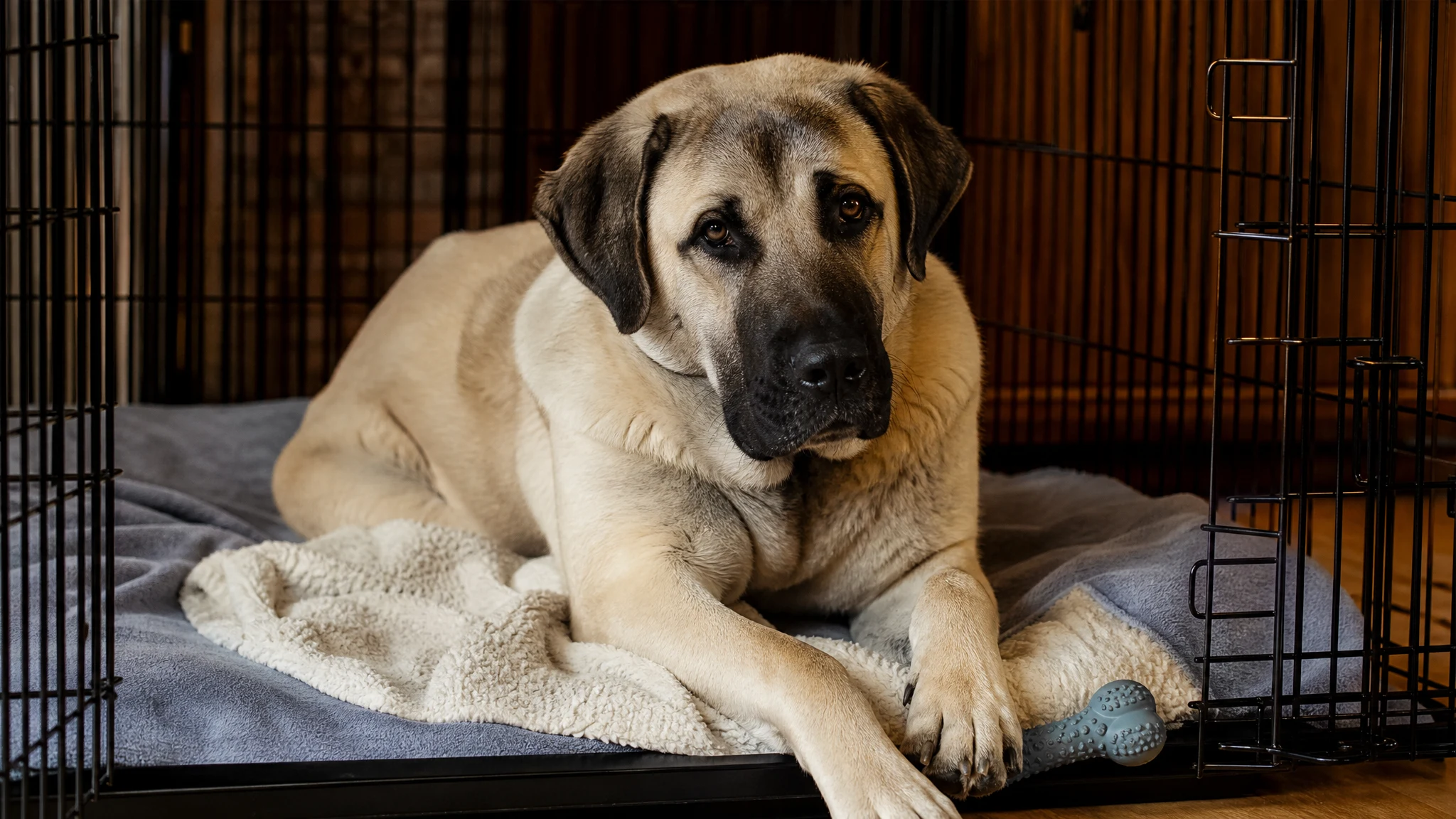
A crate can be a calm, safe place for a Kangal. It can also become a source of stress if it is introduced badly. This guide walks through kangal crate training step by step, with a focus on building comfort with alone time so your dog is less likely to struggle when you leave.
Kangals are not typical house dogs. The Kangal Dog Club of America (KDCA) describes a livestock guardian that is independent, wary of strangers and not suited to first-time owners. Crate training a Kangal works best when you respect those traits and go slowly.
Why Crate Training Matters for This Breed
Puppies grow fast. The KDCA says a Kangal puppy of 6 to 12 months can weigh 80 to 130 pounds. That is a lot of dog to manage during a vet visit, a car ride or a recovery period.
A dog that already accepts a crate is easier to handle in all of those moments. A crate also gives a safe place when guests visit, which matters for a dog the United Kennel Club (UKC) describes as reserved with strangers unless the owner is present.
The KDCA also notes that Kangals dig, tunnel under fences and wander. Indoors, a well-introduced crate gives you a safe option for the times you cannot supervise.
For the bigger picture on temperament, socialization and daily training, see the complete guide to Kangal training.
Materials You Will Need
- A sturdy, correctly sized crate. See the sizing section below.
- A firm, washable mat or bed that fits the crate floor.
- Small, soft treats your dog loves, cut into tiny pieces.
- A few safe chew or food-puzzle items suited to a very large dog. Ask your veterinarian or the manufacturer if you are unsure what is safe.
- A cover or blanket for part of the crate, if your dog seems to like a den-like space.
- A leash and a sturdy fenced or secure area for potty breaks.
- A notebook to track how long your dog stays relaxed.
Choosing the Right Crate Size for a Kangal
Size is the first decision, and it is tricky because the breed is so large and puppies change quickly.
The UKC breed standard gives adult males as 29 to 33 inches at the withers and 110 to 145 pounds. Females are 27 to 31 inches and 90 to 130 pounds. The KDCA gives slightly different figures: 30 to 34 inches and 110 to 140 pounds for males, and 28 to 31 inches and 90 to 120 pounds for females. The two sources differ, so plan for the upper end.
Use these rules when you shop:
- Your dog should be able to stand without ducking, turn around easily and stretch out lying down.
- Measure your own dog, not a chart. Check height standing and length nose to rump, then compare with the crate maker's published interior measurements.
- Look for the largest size the manufacturer offers, and check its stated weight guidance. Contact the brand if you are unsure whether a model suits a dog of this size.
- Choose heavy-duty construction with secure latches. The KDCA notes that some Kangals have climbed 6-foot fences, so a flimsy crate is a poor match.
If you buy for a puppy, you have two options. You can buy an adult-size crate with a divider to shrink the space for now. Or you can plan to replace the crate as your puppy grows. Either way, a space that is too big can make potty training harder, and one that is too small is uncomfortable.
Step-by-Step: Crate Training a Kangal
Use reward-based methods only. This matches the guidance of the American Veterinary Society of Animal Behavior (AVSAB). The KDCA also says excessively harsh obedience methods are detrimental to this breed. Never push, drag or force your dog into the crate, and never use it as punishment.
Step 1: Set up the crate in a quiet, social spot
Place the crate in a room where the family spends time, such as a living area. Add the mat and leave the door tied open. Let your dog walk in and out freely. Do not close it yet.
Step 2: Make the crate a place where good things happen
Toss a treat near the entrance, then just inside, then toward the back. Praise quietly when your dog steps in. Let your dog leave whenever it wants.
Do a few short sessions a day. Keep each one calm and easy to succeed at.
Step 3: Feed meals in or near the crate
Serve meals near the crate, then just inside, then at the back. Many dogs start to link the crate with something pleasant. Ask your veterinarian about feeding routines, because the Vet Desk lists bloat as a serious concern for the breed.
Step 4: Add a cue
Once your dog walks in happily, say a cue such as "crate" as it steps in, then reward. Keep your tone friendly. Kangals are intelligent and quick to learn, according to the KDCA, but also independent. They may ignore a cue if something more interesting is nearby, so practice when distractions are low.
Step 5: Close the door for very short periods
With your dog inside eating a treat or chew, close the door for a few seconds. Open it before your dog shows any worry. Build up from seconds to a minute, then a few minutes, while you stay in the room.
Open the door while your dog is calm, not while it is whining or pawing. Otherwise your dog may learn that fuss opens the door.
Step 6: Move around the room, then leave it
Next, stand up, walk a few steps and return. Then step out of sight for a moment. Build slowly. Go back one step if your dog becomes tense. Progress is not a straight line.
Step 7: Practice real alone time
Start with a few minutes with you out of the room, then step outside briefly. Slowly lengthen the time. Give a chew or puzzle just before you go, and keep arrivals and departures low-key.
Do some of your practice when you are not actually leaving for the day. That way, a crate session does not always predict that you are about to disappear.
Preventing Separation Anxiety in a Kangal
The KDCA says Kangals bond to the animals or family they live with. That bond is a strength of the breed, but it is a good reason to teach your dog early that time apart is normal and safe.
- Start early. The KDCA says socialization for a companion Kangal must begin very young and continue into adulthood. Include gentle practice with being alone.
- Keep it gradual. Short, successful sessions build confidence better than a long absence that goes wrong.
- Give the dog a job. The KDCA says the breed needs a job or activities to prevent boredom. Daily walks, sniffing games and food puzzles help. The club did not give a specific amount of exercise, so ask your veterinarian what suits your dog's age and health.
- Stay calm at goodbyes. A quiet exit and a quiet return help your dog treat leaving as ordinary.
- Keep a routine. Predictable meals, walks and rest times make a big dog feel secure.
Signs of Separation Distress
Kangals bark and roar, according to the KDCA, especially at night when they sense coyotes or other threats. So barking alone does not mean your dog is anxious. Look at the whole picture, and compare it with how your dog behaves when you are home.
Possible signs of distress when left alone include:
- Nonstop barking, howling or whining that does not settle
- Frantic scratching, chewing or biting at the crate door or bars
- Drooling, panting or pacing that starts as you prepare to leave
- Refusing food or treats when alone
- Accidents in a dog that is otherwise house-trained
- Signs of injury to the mouth, paws or nails after crate time
If you see these, stop leaving your dog for long periods and go back to an easier step. Shorter sessions, more food-based rewards and a different crate location may help. Do not scold. Punishing a worried dog can add stress.
When to See a Veterinarian
Talk to your veterinarian if your dog shows intense distress, hurts itself in the crate, stops eating or has sudden changes in house-training or behavior. Pain and illness can look like behavior problems, and only a vet can sort out the cause. Never try to diagnose your dog or give medication or supplements on your own.
Veterinary care is also the right place for questions about the joint and bloat concerns the Vet Desk lists for the breed, including hip and elbow dysplasia. Ask what kind of crate rest, bedding and feeding schedule suits your dog.
If distress continues, ask your veterinarian about a referral to a qualified behavior professional who uses reward-based methods. Check credentials yourself before you hire anyone.
Common Mistakes to Avoid
- Using the crate as punishment. This can make your dog fear it.
- Going too fast. Skipping from five minutes to several hours is a common cause of setbacks.
- Letting a worried dog out mid-fuss. Wait for a brief pause, then open the door.
- Buying a crate that is too small or too weak. A Kangal needs room and strength.
- Leaving the dog crated for most of the day. A crate is a tool for short, planned periods, not a substitute for exercise and company.
- Relying on the crate alone. The KDCA says Kangals are not automatic set-and-forget dogs. They need ongoing socialization and training.
- Assuming a fence or crate will hold a determined dog. The KDCA notes digging and climbing habits, so supervise and check equipment often.
What Results to Expect
Every Kangal is an individual, and no method works for every dog. With patient, consistent practice, many dogs come to treat the crate as a comfortable resting place. Some may settle more easily when left alone for short periods. Others take longer, especially adolescents, because the KDCA says a young Kangal can wander and test limits.
Expect a process of weeks to months rather than days. Keep notes, celebrate small wins and slow down whenever your dog shows stress. If progress stalls, talk to your veterinarian.
For help with the rest of your dog's education, return to our Kangal training overview.